A Con Man Strikes Oxford
A con man is successful if he can get his mark to believe in an alternative reality. It was not hard for Louis Prevaust to get J. T. Wiley to believe having a studio in the prosperous borough of Oxford would be more lucrative than plying his trade from a traveling wagon. Wiley had been traveling southwestern Chester County as an itinerant for the past 11 years, eking out a meager existence making tintypes and photographs.
Wiley dreamed of a bricks and mortar studio, with a sunny skylight. Prevaust promised to paint an amazing background for portrait posing, better than what rival John Barry had. The studio would have elegant furniture and artistic props. There would be a real darkroom with running water, a sparkling reception area and even indoor plumbing! Prevaust promised he could make that dream real
Once Prevaust and Wiley had struck up a partnership, they launched a gallery in the electric block of Oxford in 1896. This gave the con man just what he needed. An association with a well-known and trusted member of the community to give him respectability and standing in the community. The electric block was prime real estate in Oxford – offering the merchants the advantage of electricity in this rural area. Electricity first came to the borough in 1893 when Bowman’s Generating Plant was established.
But now the con man was in trouble. He couldn’t really do all the things he said he could. So, he needed to identify his marks and make this escape. To find out what happens after he absconds with a horse, you can read the biography of J. T. Wiley here.
Photocopied examples of J. T. Wiley’s imprints. The girl in the cabinet card on the left is Wiley’s daughter Theresa. The example on the right shows Wiley’s handstamp logo.
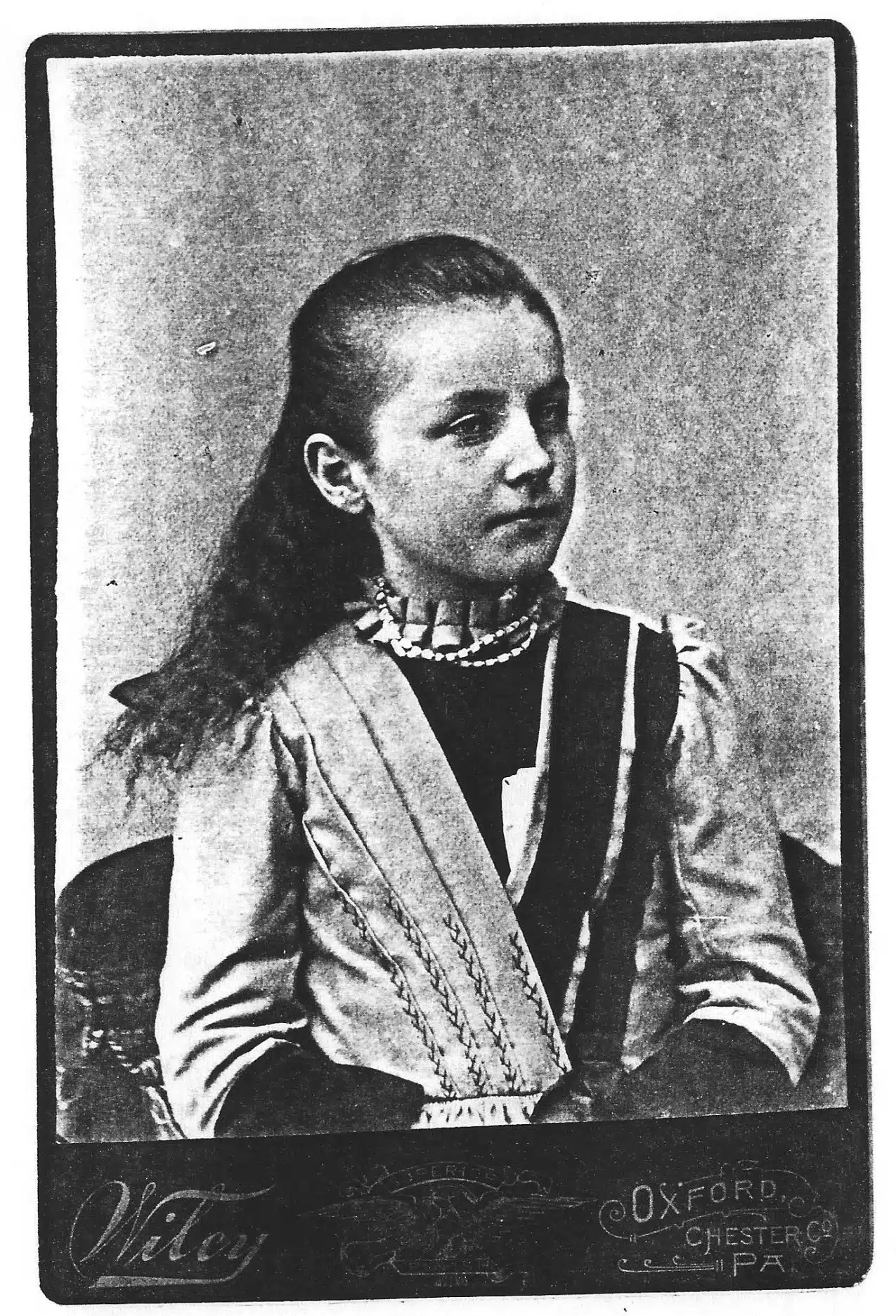

Wiley did have a studio imprint on his cabinet cards. His photographic prints are identified by a rubber stamp of Wiley’s artist’s palette logo. If you have any of Wiley’s photos please consider sharing them with Chester County Photographist, so everyone can see the fine quality of his work.