Why are tax lists so important to this study?
One of the best tools I discovered to refine a photographer’s working dates was a thorough review of the local tax lists. By looking at them over time, you can determine when a photographer was working in a certain location, when he bought property and more importantly, when he left.
You notice that I am using “he” in the paragraph above. This is because only men over 21 years old were taxed by the local boroughs & townships and the state. Women’s occupations were not taxed. Unfortunately, this makes the women who worked in photography an invisible part of the community.
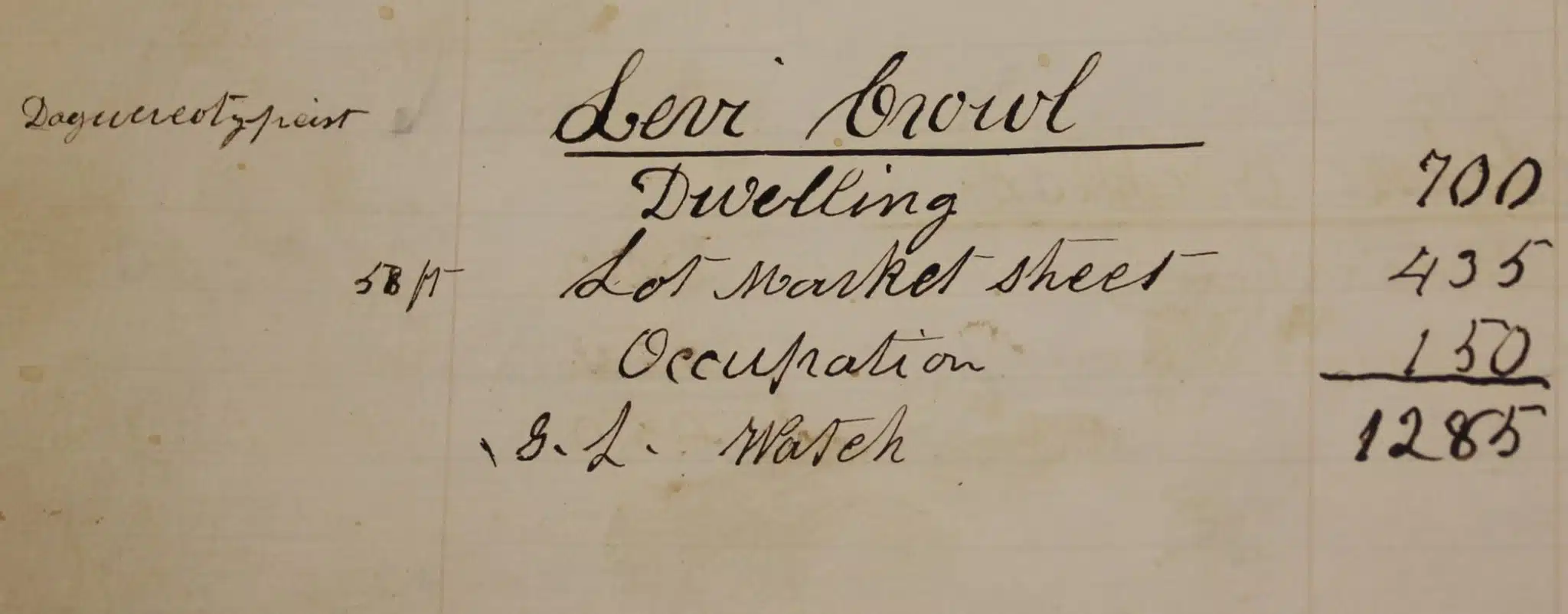
Tax Lists contain a wealth of information. It can tell you the person’s tax status: if they were a property holder, married or single. If he was the right age for military service with the local militia. The local tax collector recorded what property the person had including real estate, horses, cows, dogs, carriages, and watches. Yes! Some tax collectors were very fastidious about recording whether it was a gold or silver watch!
Occupations were given a flat rate classification. For example a professional like a doctor or lawyer would have a rate of 400, while a laborer would be only 50. Tradesmen would be given a rate of between 100 and 300 depending on how large their business was. So this is helpful in signaling how well a photographer’s trade was going.
You will notice that the tax collectors used the term “photographist” as their occupational description for those producing photographs on paper. In the tax list we see a logical progression of terms used: daguerreotypist, ambrotypist, tintypist, and finally when photographs came along -photographist was used. This is valuable information to determine what process the photographer may have used in the early days of photography.
The most interesting part of a tax list is seeing a name crossed out. This means that the individual was there in the fall of the year before, but by spring had moved on. Sometimes the tax collector crossed off an entry and noted “Left” beside it. This tells me when the photographer either moved on to another location or sold the business to another. See, negative results are positive!
I have posted the tax list data that I recorded from the ledgers found at the Chester County Archives and Records Services for West Chester, Oxford and Coatesville. I worked with many of the early ledgers in their original form, since not all of them have yet been digitized. I was fascinated to see the record of all those residents who worked in each borough and their occupations. I found many new names by perusing these pages. It was time well spent!