West Chester Centennial Photo Frenzy
West Chester’s Centennial in October of 1899 was a photographer’s dream. The town celebrated in a big way. Colorful bunting decorated all the businesses and public buildings. Two huge parades showcased the three local fire companies as well as a civic parade. The local veterans were honored with a grand luncheon as well.
There were infinite opportunities for the photographer. Every proud businessman wanted a photograph to remember his highly decorated store or home. The parades offered great opportunities as well, with most of the town’s residents taking part.
Photographer Thomas W. Taylor was on the Centennial Committee, naturally in charge of arranging for the official photographs. Many of the photographs were taken by Lewis Marshall, who had just purchased Taylor’s studio in June of that year. Taylor himself staged the taking of the official photo of the Centennial Committee. Albert I. Biles took most of the photographs for the Centennial Souvenir publication.
Every photographer in town was offering photographs of the event for sale in their studios. Photographers from outside the town came as well. Robert Young, Jr. of Coatesville advertised that he was available to photograph events and decorated buildings.
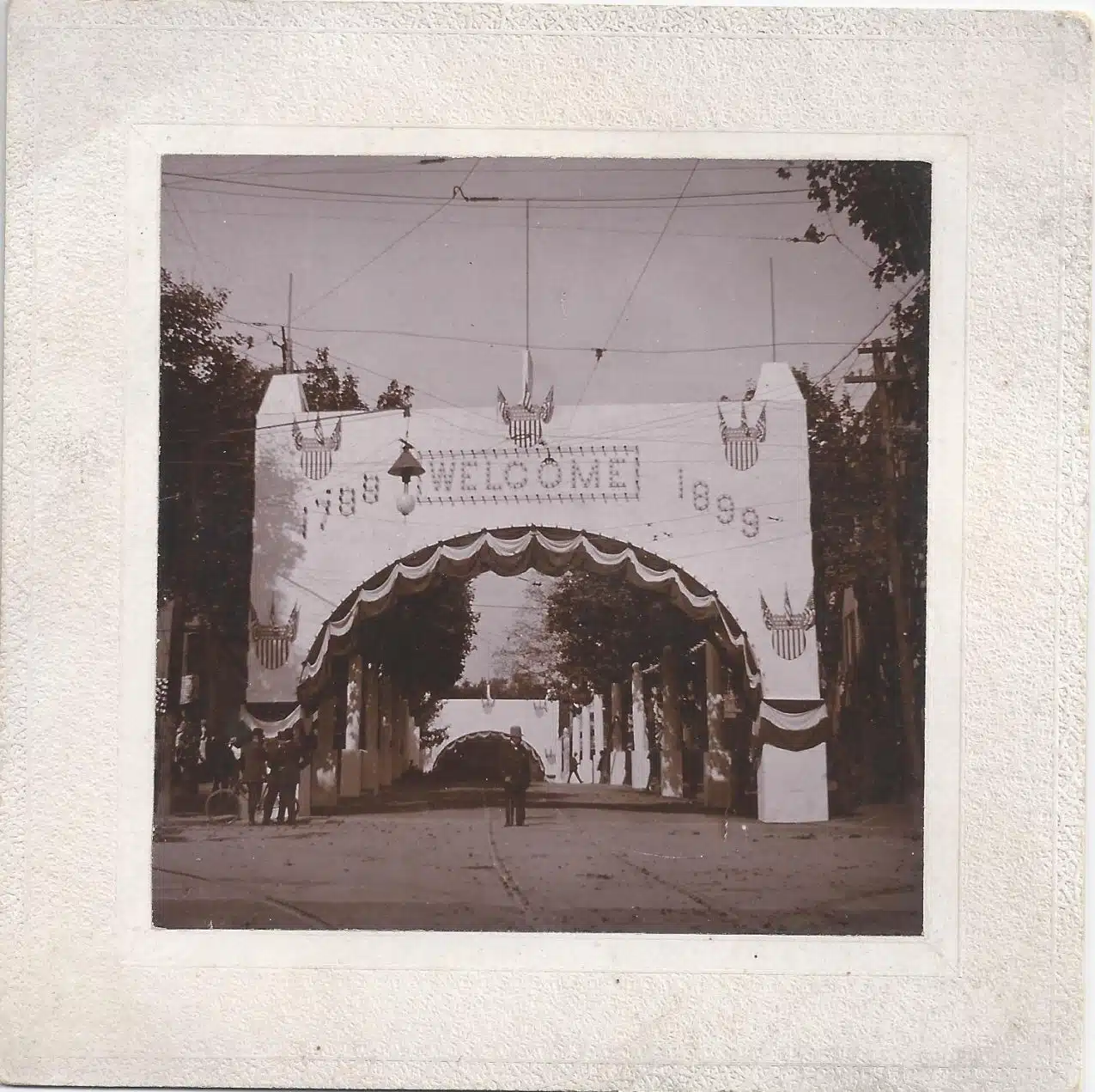
West Chester photographer William F. Haverstick, decided to capture a more candid view of the Court of Honor at the corner of High and Market Streets. These arches, illuminated with hundreds of electric lights, delighted local residents and created a magical ambiance in the town. The arches were cleverly designed to not interfere with the passage of the trolley up and down High Street. This Court of Honor provided an area for a reviewing stand for honored guests to view the parades.
By choosing to use a handheld camera, Haverstick had the flexibility to walk around town and spontaneously take photos. The image featured here was taken using a camera such as one of Kodak’s Bullet series which used 3 ½ x 3 ½ roll film. He could capture candid images and shoot multiple frames without being encumbered by using a tripod or the typical glass plate negatives used in professional studios of the day.
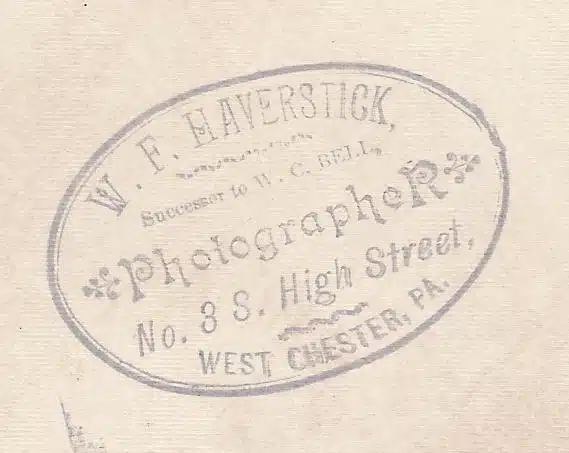
Haverstick printed the images using collodion printing-out-paper, probably gold toned, which had the pleasing brownish-purple tone seen here and mounted them on square white mounts measuring 5 x 5 inches. He then applied his handstamp to the verso of the mount. He took a whole series of views of the parades and decorations which are now part of the Chester County History Center’s collection (See Photo Archives #DN64).